
Five Things That Mattered This Week | May 23, 2026
NACHO dip on the Strait, oil freaks, Tulsi Gabbard resignation, Mexico and the EU unite, Iranian people caught in the middle. A week of aftershocks that continue to reverberate. There's art, too!

Welcome to your weekend!

One half of us is on sabbatical and the other is cramming for their doctorate so writing has become sparse but we’re back to dig into the news with you to welcome the weekend.
This was the week the world kept trying to price in peace without quite believing in it. Markets rallied on every diplomatic whisper from the Gulf, but oil stayed nervous, the dollar stayed bid, and central banks looked less like they were preparing to ease than preparing to defend against the next inflation wave. From Hormuz to Gaza, Ukraine to Taiwan, the pattern was the same: ceasefires without settlement, negotiations without trust, and governments discovering that every conflict now travels by tanker route, bond yield, drone path, refugee corridor, and grocery bill.
Traders moved away from the “NACHO” position — “Not Any Chance Hormuz Opens” — but, as predicted, the optimism was provisional because the hard questions had not actually been solved. Iran’s uranium stockpile remains unresolved. The question of shipping tolls and authority in or around the Strait remains unresolved. Trump’s threat to resume military action still hangs over the talks. Investors were not pricing in peace so much as pricing in the possibility that the next bad thing might not happen immediately.
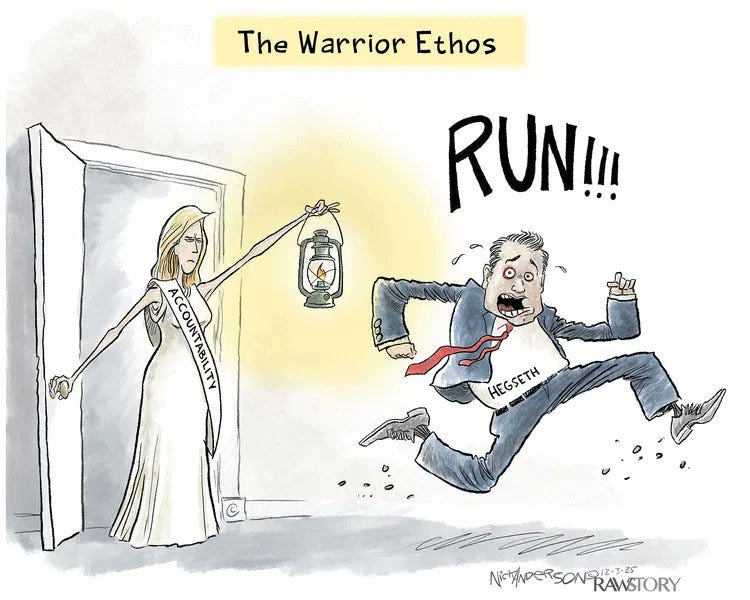
Tulsi’s out. Who’s next? Trump had to call out Hegseth on the troop removal from Poland, of all things. Turkey has officially shut off the lights on democracy.
This was a week (and more!) of secondary shocks. Not every story was the main earthquake, but each one showed the aftershocks spreading: Ukraine through drones and prisoner swaps, NATO through force posture, Mexico and Europe through trade hedging, Iran through civilian fear and documentation, and the U.S. through a coalition starting to strain under the weight of war politics at home.
We leave you this week where so many stories left us: at the edge of the water, watching the horizon for signs of return, rescue, rupture, or storm. Hormuz is not the only narrow passage. Gaza, Tehran, Taipei, Kyiv, Nairobi, and even Washington are all caught in their own straits now, waiting to see what can still move through and what has already been blocked.
Thank you for reading this far. Paid subscribers get full access to Grounded Perspectives and our Friday wrap ups, plus much more. If you’re so inclined, throw a couple coins into our human battery fund — also known as mochas and green teas. We’re glad you’re here.
Until Monday, keep watch for what returns … and what the tide reveals.— Ali & Asli
Upgrade to paid for just $5 and you’ll get full access to all our Friday wrap ups! It’s worth it. We always bring the juice!

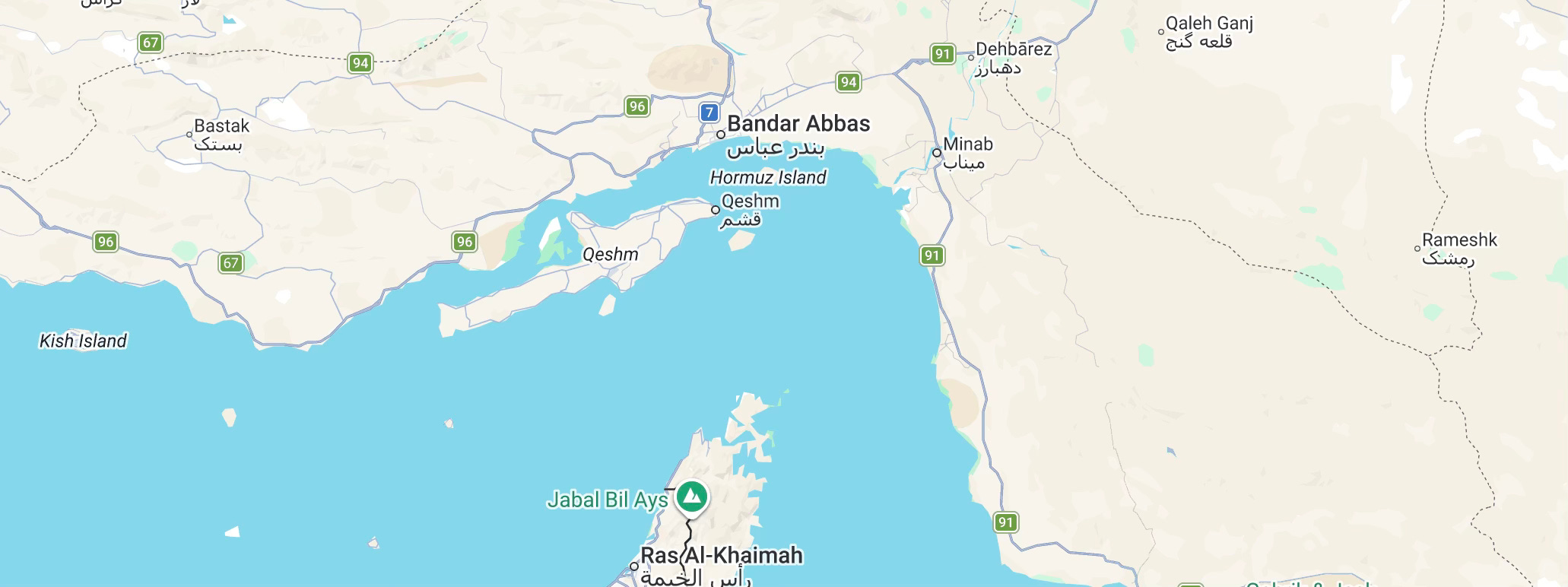
🎯 The U.S.–Iran war remained the axis around which everything else spun this week, turning the Strait of Hormuz from a geographic chokepoint into the world’s main pressure valve. Markets rallied Friday on cautious hope around U.S.–Iran talks, but the optimism looked more like relief trading than real confidence. The hard issues are still exactly where they were: Iran’s uranium stockpile, the reopening and future control of Hormuz, sanctions relief, blockade terms, shipping guarantees, and whether diplomacy is actually building a way out or merely buying time before the next escalation. Brent stayed volatile in the low-$100s, while the dollar hit a six-week high and rate-cut hopes faded into a more uncomfortable “higher-for-longer, maybe higher-again” story. The market may have stepped back from full panic, but it has not stepped into peace.
The week’s best shorthand came from the trading desk phrase NACHO — “Not Any Chance Hormuz Opens.” Earlier in the week, oil markets had been leaning toward that position: assuming the Strait would stay effectively closed, supply would remain constrained, and every barrel moving through the Gulf would carry a war premium. By Friday, traders had backed away from the hardest version of NACHO as talks appeared to gain some traction. But the retreat was cautious. No one wants to be caught pricing in a diplomatic breakthrough only to wake up to another missile strike, another tanker disruption, or another failed round of talks. In other words, markets are no longer assuming Hormuz has no chance of reopening — but they are also not convinced that reopening means stability. A corridor can technically reopen and still remain politically weaponized, militarily vulnerable, and economically explosive.
That uncertainty is now traveling far beyond the Gulf. Taiwan became another pressure point in the shadow of Iran after Taipei said it had not been formally told of any U.S. changes to arms sales, despite U.S. comments suggesting some military sales could be paused to preserve munitions for the Iran conflict. That matters because Taiwan is no longer just a China file. It is now tied to America’s ability to sustain multiple theaters at once. The U.S. has spent years trying to project that it can deter Russia in Europe, Iran in the Middle East, and China in the Indo-Pacific simultaneously. But deterrence is not just rhetoric or alliance language. It is stockpiles, shipping lanes, defense production, interceptors, missiles, spare parts, presidential attention, and political will. If the Iran war is already forcing Washington to slow, prioritize, or rethink weapons flows elsewhere, then Beijing will notice. So will Taipei.
The prediction from here is that diplomacy will probably produce some kind of temporary mechanism before it produces a real settlement. The pressure is too high for everyone. From oil markets, Gulf states, Washington, Tehran, Europe to China, to let Hormuz remain fully frozen without at least trying to create an off-ramp. But the likely outcome is not clean peace. It is more likely a provisional arrangement: partial reopening, monitored shipping lanes, backchannel guarantees, sanctions ambiguity, and a nuclear discussion pushed into a longer timetable. That may be enough to cool Brent temporarily and give equities another relief rally, but it will not remove the risk premium. The market will keep treating Hormuz as one headline away from breaking again.
The Iran war has become a stress test for the whole U.S.-led security system. Hormuz is testing energy security. Taiwan is testing deterrence credibility. The dollar is testing inflation expectations. The Fed is testing whether it can still think about cuts while oil threatens another price shock. And allies are testing whether American commitments still arrive on schedule when multiple theaters start competing for the same military inventory. This week did not resolve that question. It made it impossible to ignore. The war in the Gulf is not staying in the Gulf. It is moving through markets, alliances, munitions pipelines, and strategic calculations from Tehran to Taipei.
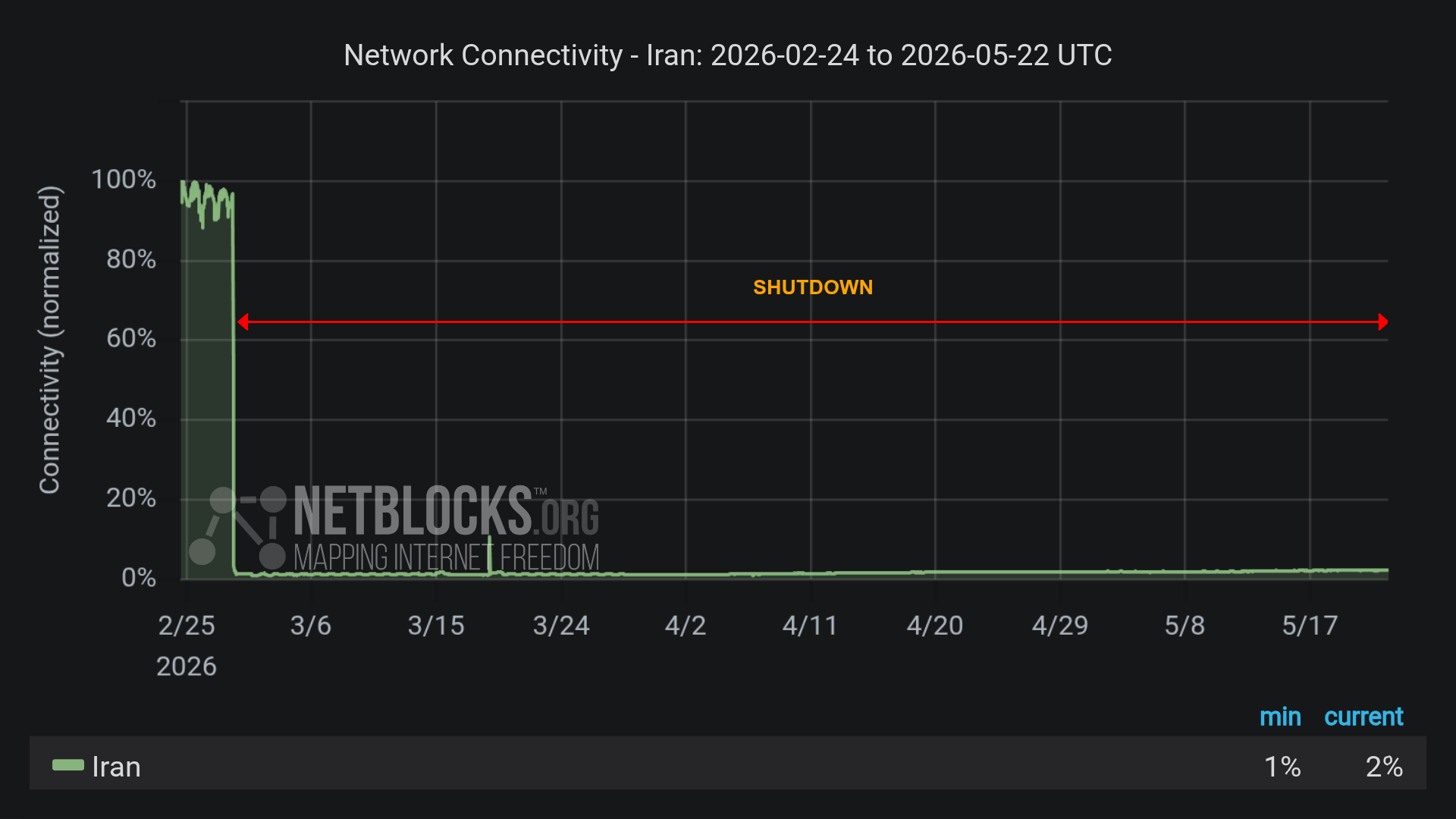
From one chokepoint to another. Iranian people are trapped in the worst possible double-bind — squeezed by war from outside and repression from inside. The regime is using national-security logic to tighten control, while ordinary people are absorbing the cost through inflation, layoffs, shortages, disrupted supply chains, and fear. Reuters has reported that businesses have been crushed by high prices, supply-chain disruption, and the internet blackout, with unemployment spiraling; one Tehran rice and grain seller said sales had fallen about 40% since the war began. The war is not just moving barrels, bonds, and currencies. It is emptying wallets, cutting work, breaking small businesses, and making basic goods harder to afford.
Politically, the mood seems grim and complicated rather than cleanly revolutionary. Many Iranians were already angry at the clerical establishment and wanted change, reports last month noted the bombing campaign caused many to sour on the war itself. Anti-regime does not automatically mean pro-U.S. strikes. A lot of Iranians can despise the Islamic Republic and still experience foreign bombardment, blockade, and economic collapse as another form of abandonment.
The repression side is also sharpening. Iran executed two people this week on national-security charges, according to Tasnim. That kind of opaque “security” prosecution matters because wartime gives the state a larger vocabulary for crushing dissent: spy, collaborator, terrorist, saboteur, foreign agent. The regime can fold protest, labor unrest, ethnic grievances, women’s resistance, and ordinary anger over prices into one big emergency file.
But there are also small signs of civilian life trying to come back through the cracks. Live music has begun returning to Tehran under the fragile ceasefire, including a concert at the Tehran Contemporary Art Museum with hundreds of attendees and about 50 musicians. One striking detail: the performance included eight female musicians and one woman singing before a mixed-gender audience, still unusual under Iran’s theocratic restrictions. That is not “normalcy,” exactly. It is more like emotional triage. People trying to recover a little beauty, sound, public life, and breath after months of silence and fear.
The Iranian street probably does not explode immediately unless the economic pain combines with a visible regime failure or another brutal crackdown. For now, the more likely pattern is pressure-cooker survival: private rage, small acts of cultural defiance, labor strain, black-market adaptation, families trying to leave if they can, and a regime that uses the war to justify more surveillance and executions. If Hormuz partially reopens and sanctions talks begin, the regime will try to sell endurance as victory. But for ordinary Iranians, the deeper truth is harsher: even a diplomatic pause will not quickly restore jobs, trust, medicine, money, or dignity. The war may cool before the society does.
Iranian state TV has been airing rifle displays in studio segments, with presenters and government supporters handling weapons on camera. In one broadcast, after instruction from an IRGC member, a presenter reportedly pointed a weapon at an image of the UAE flag and fired at it; in another, an IRGC member demonstrated shooting techniques with a Kalashnikov while aiming at images of Benjamin Netanyahu and Donald Trump. Critics inside Iran said the scenes blurred wartime morale-building with intimidation, and the reformist newspaper Sazandegi said the UAE flag shooting left public opinion “shocked and astonished.”
Inside Iran, the civilian story keeps getting darker as families and witnesses help reconstruct what happened at Alghadir Hospital during the January massacre. Iran International says it has now identified 21 people whose bodies were taken there or whose final hours passed through its corridors, storage rooms, and rear courtyard. Witnesses describe a hospital overwhelmed by gunfire, fear, and security-force pressure. Doctors and nurses tried to save the wounded while families searched through blankets, morgue areas, and hospital grounds for sons, fathers, students, and workers who had vanished into the machinery of the crackdown.
🎯 Mexico and the EU signed their long-delayed modernized trade agreement this week, and the timing is the story. The deal updates their original 2000 agreement and expands it beyond industrial goods into services, government procurement, digital trade, investment, agriculture, and broader political/security cooperation. It was signed in Mexico City on May 22, 2026, with Claudia Sheinbaum, Ursula von der Leyen, and António Costa present. It was the first EU-Mexico summit in more than a decade.
The strategic meaning is clear: Mexico and Europe are both trying to diversify away from U.S. volatility. For Mexico, this is a hedge against dependence on the American market just as USMCA renegotiations are beginning and Trump’s tariff pressure remains a live threat. For the EU, it is part of a wider push to build trade routes and supply-chain partnerships outside the U.S.-China squeeze. The agreement grants near-total duty-free access for goods, including agricultural products such as Mexican chicken and European cheese, and Mexico projects its exports to the EU could rise from about $24 billion to $36 billion by 2030.
The USMCA timing makes this even sharper. Washington’s first formal talks to update USMCA are set to begin next week in Mexico City, focused on content rules and economic security. Essentially, how much production has to be North American, and especially American, to qualify for trade benefits. Strikingly, those first talks are expected to involve the U.S. and Mexico, not Canada, which already hints at a more fragmented, pressure-heavy regional trade environment.
This will not replace Mexico’s dependence on the U.S. market anytime soon — geography still wins — but it gives Sheinbaum leverage. Mexico can walk into USMCA talks with a little more room to maneuver, while Europe gets a stronger foothold in North America’s supply-chain ecosystem without relying entirely on Washington. Expect more of this: not clean decoupling, but strategic hedging, with countries layering trade agreements like insurance policies against tariff shocks, war risk, and American political whiplash.
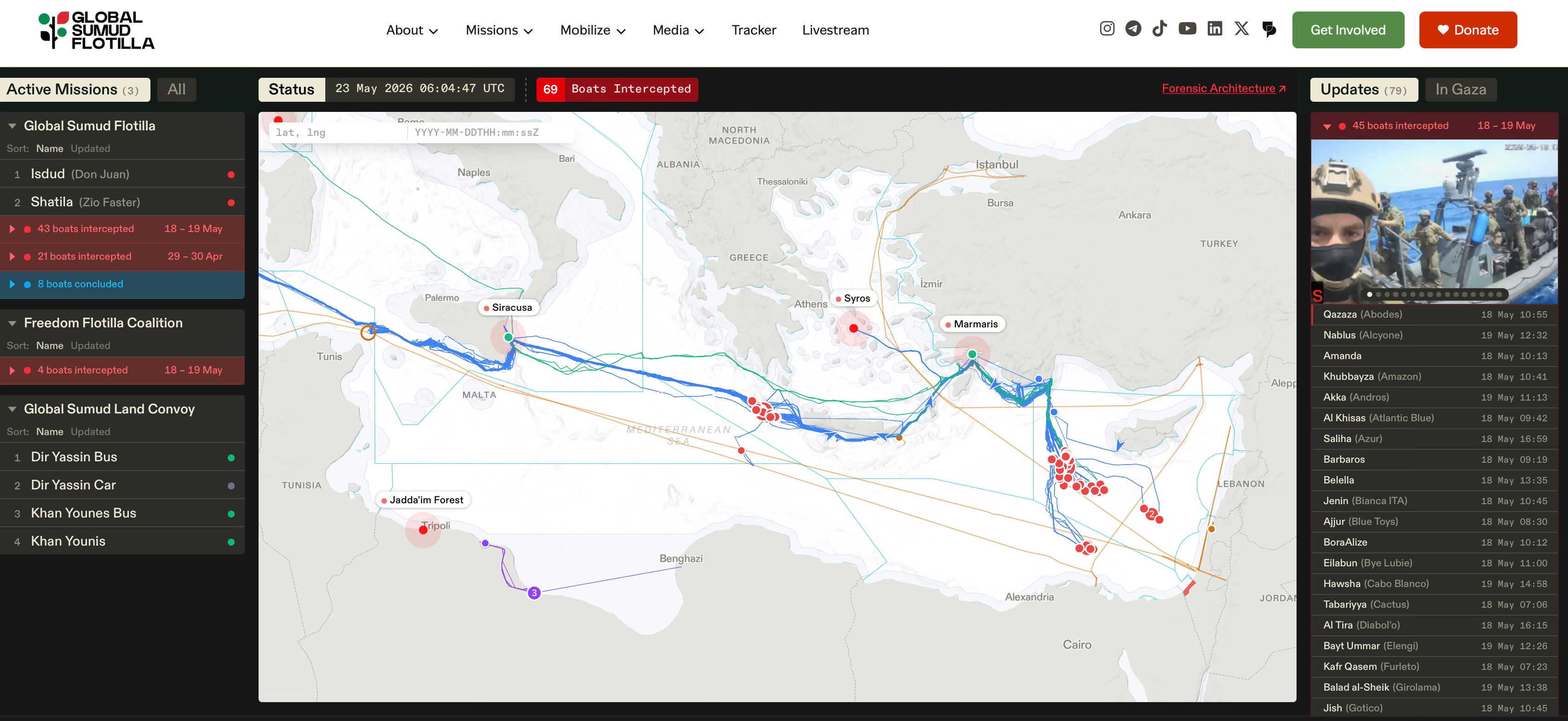
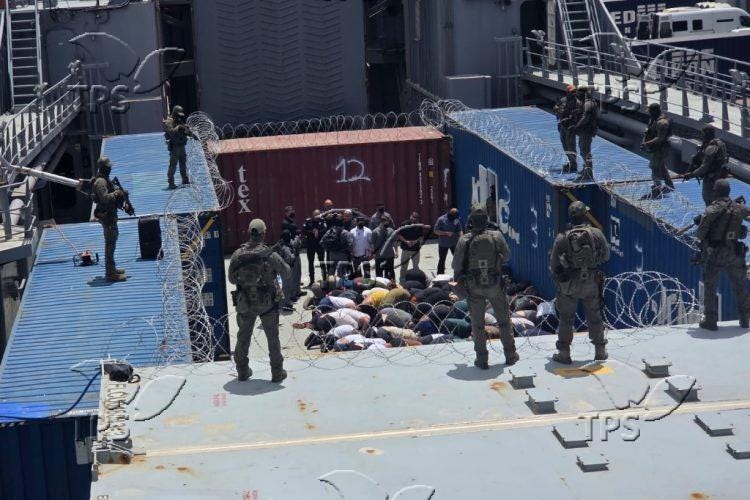
🎯 Gaza moved back into international focus after Israel intercepted the Global Sumud Flotilla. Israeli forces detained hundreds of activists from dozens of countries attempting to bring aid to Gaza. Video of detainees kneeling with hands bound, posted by Itamar Ben-Gvir, triggered international outrage and criticism even inside Israel’s government. The wider Gaza picture remains grim: the U.N. was warned that Gaza’s division risks becoming permanent, with more than 2 million people crowded into less than half the territory while Israel maintains troops in much of Gaza and Hamas refuses to disarm.
Gaza moved back into international focus after Israeli forces intercepted the Global Sumud Flotilla, a Gaza-bound aid convoy of dozens of vessels carrying hundreds of activists, journalists, and lawmakers from more than 40 countries. Israel framed the flotilla as a political provocation and said it had the right to enforce its blockade, but the optics quickly became the story: activists were detained, some alleged abuse in custody, and video showed detainees forced to kneel with their hands bound. The backlash intensified after National Security Minister Itamar Ben-Gvir posted footage mocking the detained activists — a spectacle that drew condemnation within in Israel and abroad, including a public rebuke from Netanyahu, who said Ben-Gvir’s conduct was inconsistent with “Israeli values” and “norms”.
“Israel has every right to prevent provocative flotillas of Hamas terrorist supporters from entering our territorial waters and reaching Gaza.
However, the way that Minister Ben Gvir dealt with the flotilla activists is not in line with Israel’s values and norms.
I have instructed the relevant authorities to deport the provocateurs as soon as possible.”— Israeli Prime Minister Benjamin Netanyahu
The flotilla episode matters because it internationalized Gaza again at a moment when the war’s underlying geography is hardening. At the U.N., Gaza envoy Nickolay Mladenov warned that Gaza’s division risks becoming permanent with more than 2 million people are crowded into less than half the territory, while Israeli forces remain in about 60% of Gaza and Hamas continues to refuse to disarm. That is the deeper story beneath the flotilla drama. Gaza is not only under blockade. It is being structurally reorganized into zones of control, displacement, and stalled reconstruction, with humanitarian access still limited and political settlement nowhere in sight.
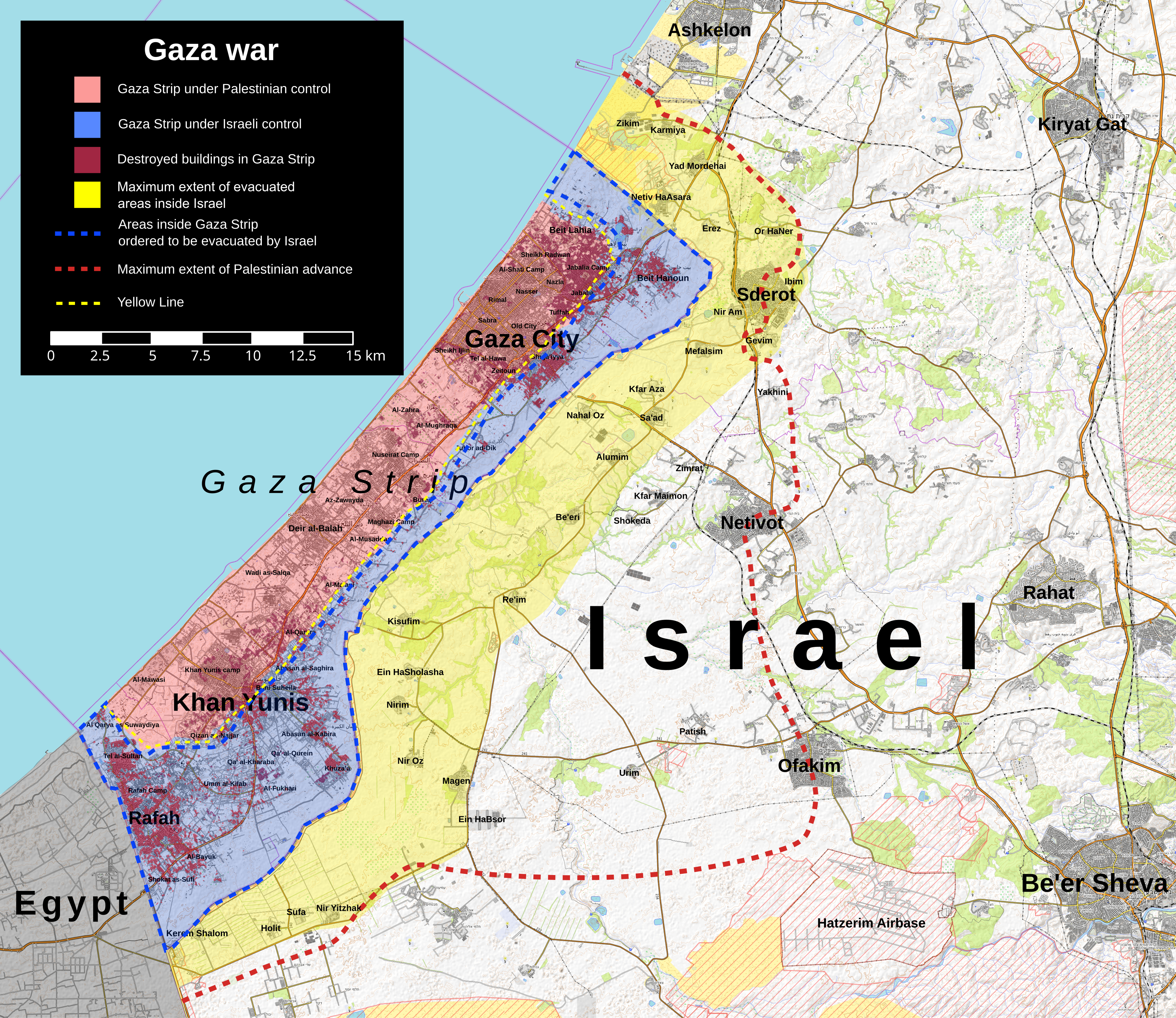
The prediction here is bleak but important to highlight. Gaza is drifting toward de facto partition unless a ceasefire mechanism becomes more than paperwork. Israel will likely continue using security control and restricted aid flows as leverage. Hamas will resist any disarmament while claiming survival as legitimacy. And of course, international outrage will spike around visible incidents like the flotilla but struggle to force a durable political shift. The risk is that Gaza becomes a frozen catastrophe not fully at war in the old sense, not at peace, not rebuilt, not sovereign, but managed through checkpoints, buffer zones, aid bottlenecks, and periodic eruptions of violence.
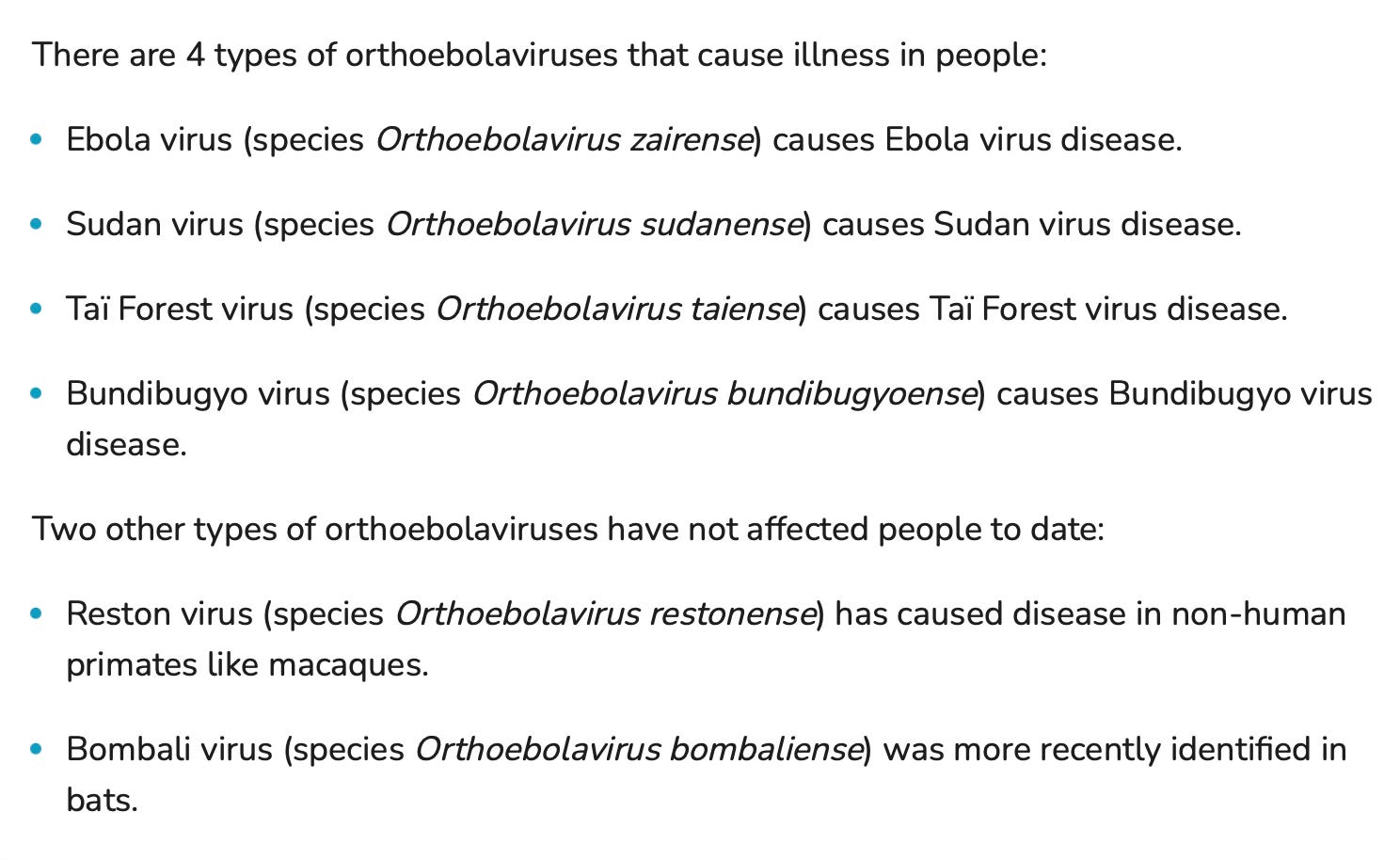
🎯Africa had two major distress signals this week: Ebola in Congo and fuel unrest in Kenya. In the Democratic Republic of Congo, the WHO raised the national risk level for the Ebola outbreak to “very high,” with the Bundibugyo strain spreading after likely circulating undetected for weeks. Confirmed numbers are already serious, but health officials warn they may only be the visible edge of a much larger outbreak. Suspected cases have climbed into the hundreds, suspected deaths have risen sharply, and the strain currently has no approved vaccine. Containment is also being complicated by violence, misinformation, community mistrust, and the difficulty of tracing contacts in areas already strained by conflict.
Kenya, meanwhile, showed how fast the Iran/Hormuz shock can travel into domestic politics. Public transport operators called off a strike after President William Ruto promised to cut diesel prices in the next monthly review, following protests over soaring fuel costs that left four people dead and more than 30 injured. Diesel had jumped sharply in the May-June cycle, with the government linking the spike to global energy disruption from the Iran conflict, though opposition figures blamed corruption and profiteering. Either way, the effect was immediate: transport paralysis, street clashes, commuters stranded, and a government forced to subsidize fuel despite already severe fiscal pressure.
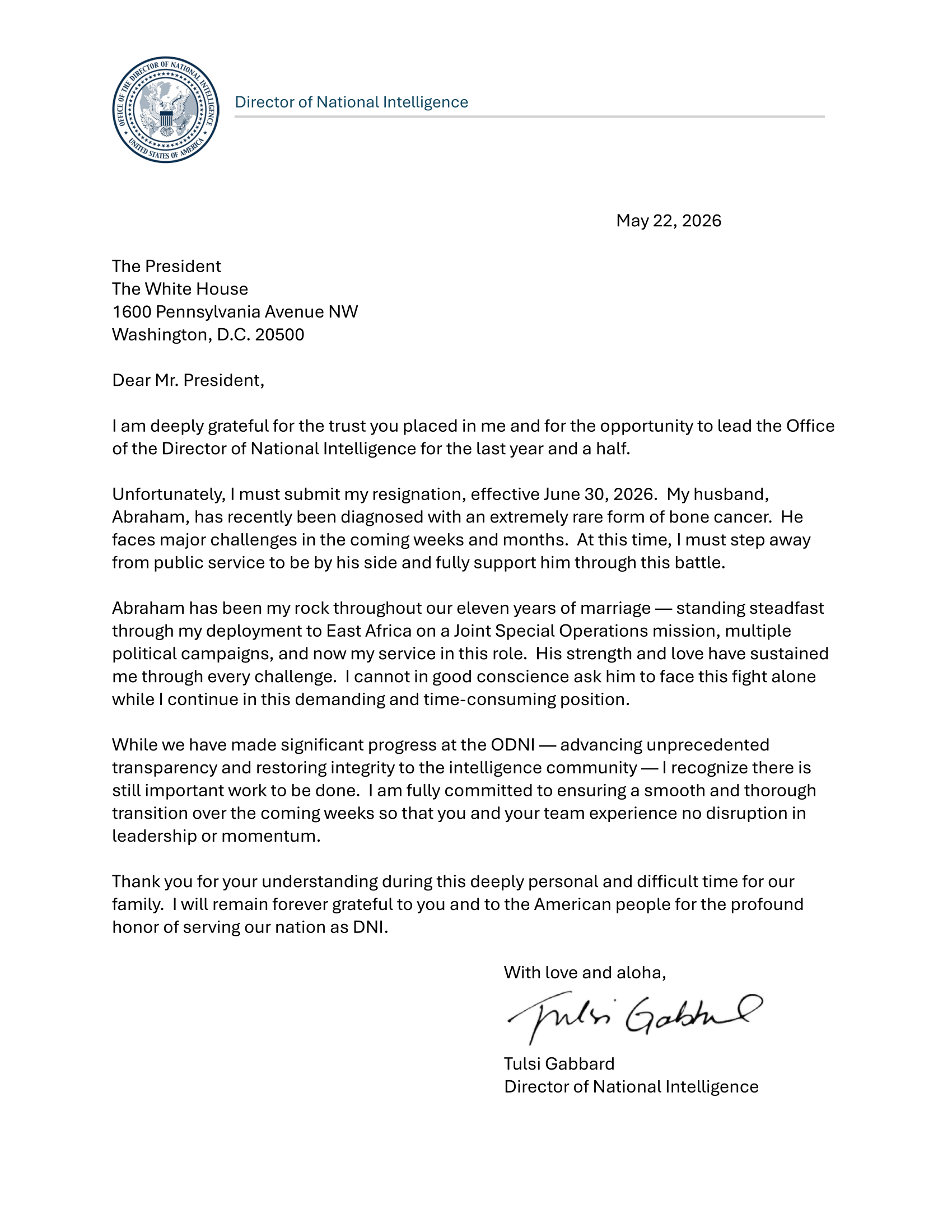
Tulsi Gabbard’s official resignation letter
🎯 In the U.S., Trump’s domestic coalition showed signs of strain on multiple fronts. A Republican revolt stalled a $72 billion immigration enforcement funding bill after senators objected to Trump-linked additions, including a $1.8 billion “anti-weaponization” fund and funding connected to a White House ballroom project. Then came the resignation of Tulsi Gabbard as Director of National Intelligence, effective June 30, she claimed it was officially to support her husband through treatment for a rare bone cancer but the timing carried obvious political weight. Her rocky and contentious tenure had already been marked by friction with the White House, especially around Syria, Venezuela and Iran, where her “anti-interventionist” (and pro-Assad/Putin) instincts sat uneasily beside Trump’s expanding war posture. Her departure now removes one of the administration’s most visible “antiwar” validators at exactly the moment Iran, inflation, gas prices, intelligence credibility, immigration enforcement, and Trump’s personal priorities are colliding inside the GOP rather than simply between parties.
Tulsi’s exit is likely to sharpen the internal split between Trump’s nationalist-populist anti-interventionist wing and the harder security faction now empowered by the Iran war. Gabbard’s exit may be framed as personal, but politically it clears space for a more hawkish intelligence posture, strengthens figures like CIA Director John Ratcliffe, and makes it easier for the administration to align intelligence messaging with the war track. The risk for Trump is that every pressure point now feeds the others: the Iran war drives oil prices, oil prices drive inflation anxiety, inflation weakens the domestic coalition, and defections or resignations inside the administration make the whole project look less disciplined just as the White House needs maximum control.
President Trump announced that Gabbard’s deputy, ex-CIA officer, Aaron Lukas, would serve as acting director of national intelligence until a candidate is officially nominated.
What Else Mattered This Week:
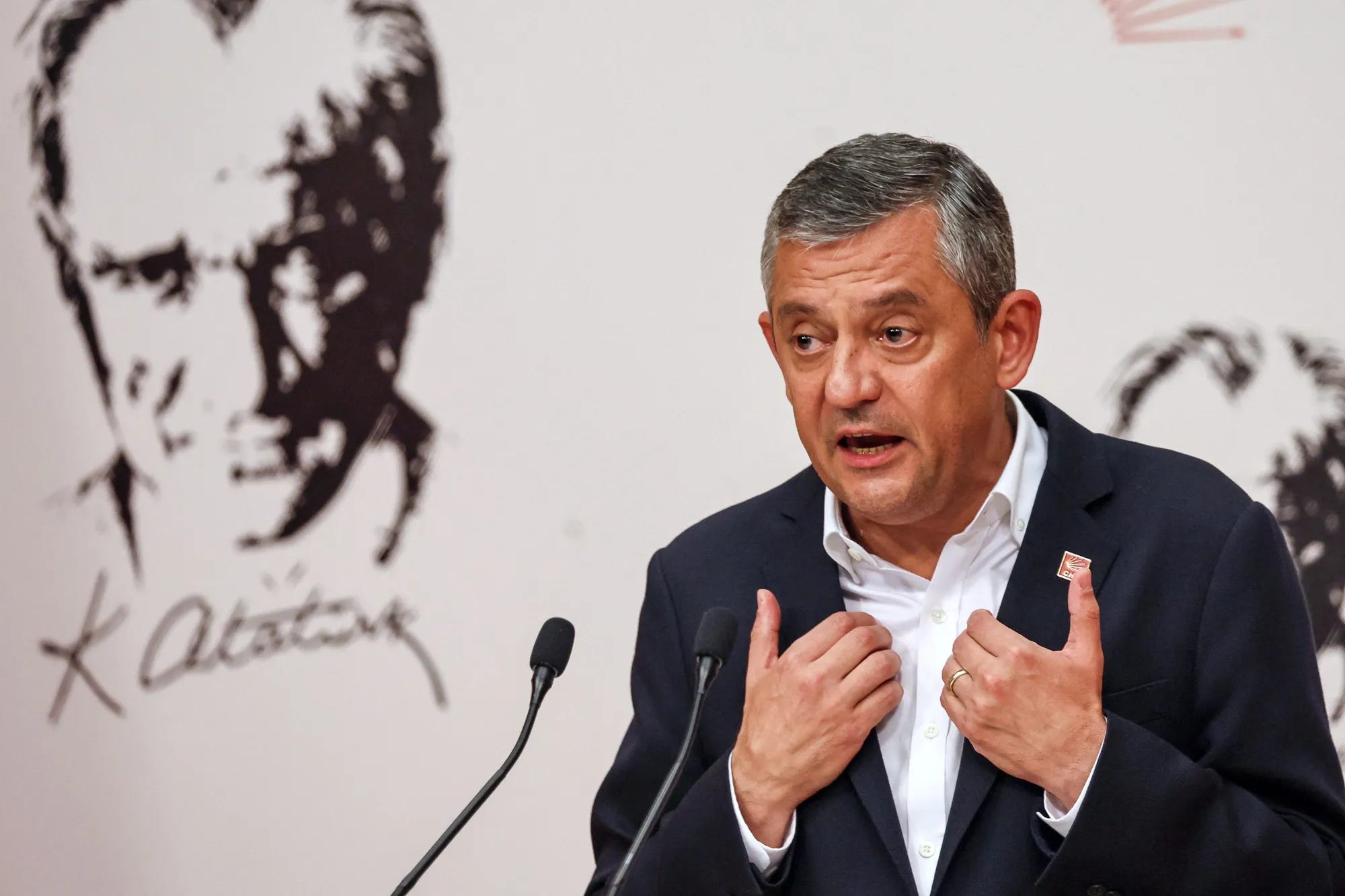
📍Turkey’s CHP crisis is bigger than opposition politics. It’s not just any opposition party, but the founding party of the Turkish Republic, established by Mustafa Kemal Atatürk and still carrying the symbolic weight of secular republicanism.
Turkey’s opposition crisis escalated sharply after a court annulled the CHP’s 2023 congress, removing Özgür Özel as party leader and reinstating former chairman Kemal Kılıçdaroğlu. Özel called the ruling a “judicial coup,” vowed to challenge it, and called for a new party congress within 40 days, while prosecutors detained 13 people across seven provinces over alleged vote manipulation tied to the 2023 leadership contest.
“Today is a dark day for Turkish democracy.”
— Özgür Özel
The ruling lands inside a much wider crackdown on the CHP: Istanbul Mayor Ekrem İmamoğlu, Erdoğan’s most potent rival, remains jailed on charges he denies, while the party says hundreds of members and local officials have faced politically motivated investigations. The government insists the judiciary is independent, but the timing is hard to separate from the broader political map: after the CHP’s sweeping 2024 local election wins, Turkey’s main opposition is now being squeezed through courts, detentions, leadership disputes, and pressure on its presidential bench.
Erdoğan benefits most if the CHP is forced into an internal legitimacy fight between Özel and Kılıçdaroğlu while İmamoğlu remains legally boxed in. But the risk for the government is that the move turns into a rallying point rather than a decapitation. Özel reportedly still has the support of most CHP lawmakers, and if he can force a new congress quickly, the court ruling may sharpen the opposition’s message: that Turkey’s next election is not just about Erdoğan versus CHP, but ballots versus judges.
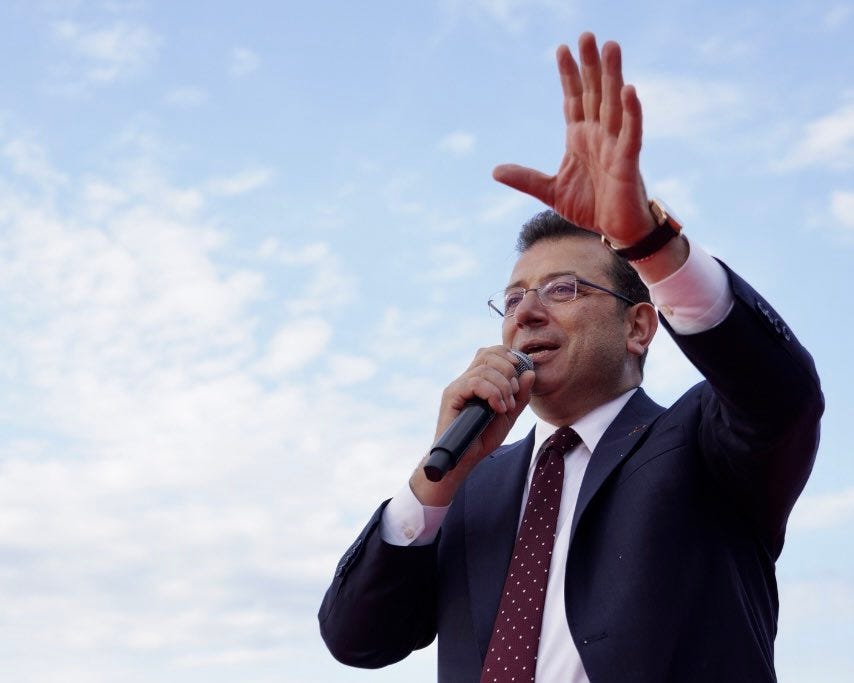
I say this with a heavy heart. The Erdoğan regime has now used captured courts to stage a judicial coup against the CHP, my political home and Türkiye’s oldest party.
Using the judiciary to replace a party’s democratically elected leadership carries no legitimacy. This is a blatant attempt to reshape political competition through the courts.
What happened today goes far beyond one party. It is an attack on the will of the people, on democracy, on the Republic, and on the foundations of the constitutional order.
Türkiye has seen too many moments when law was weaponized to redesign politics and this must not become another one.
This act is no longer only about party politics. The people of Türkiye must now stand together for their country.
We will not yield. Together, we will defend our party, our democracy, and our Republic.— Ekrem İmamoğlu
📍An Oakland, California jury needed only two hours to toss Elon Musk’s court case against OpenAI CEO Sam Altman. The jury unanimously found that Musk’s remaining claims against OpenAI, Sam Altman, Greg Brockman, and Microsoft were barred by the statute of limitations. The key legal point is that the jury found Musk knew or at least, should have known, about OpenAI’s commercial meets for-profit direction years earlier, so he waited too long to sue. Musk has already signaled he plans to appeal, keeping the feud alive even as OpenAI walks away with the immediate win.

📍Ukraine saw movement on prisoners, but not on peace. Russia and Ukraine exchanged 205 prisoners of war each, a rare humanitarian opening that Zelenskyy described as the first phase of a larger proposed 1,000-for-1,000 swap tied to the recent U.S.-backed ceasefire. For families waiting since the early years of the war, the exchange mattered deeply — names returned, bodies accounted for, sons and husbands brought back across the line. But it did not signal real de-escalation. The ceasefire was followed almost immediately by renewed strikes, including major Russian attacks on Ukraine and large-scale Ukrainian drone attacks inside Russia. The pattern remains brutally familiar: a negotiated aperture opens, human beings pass through it, and then the war closes over them again.
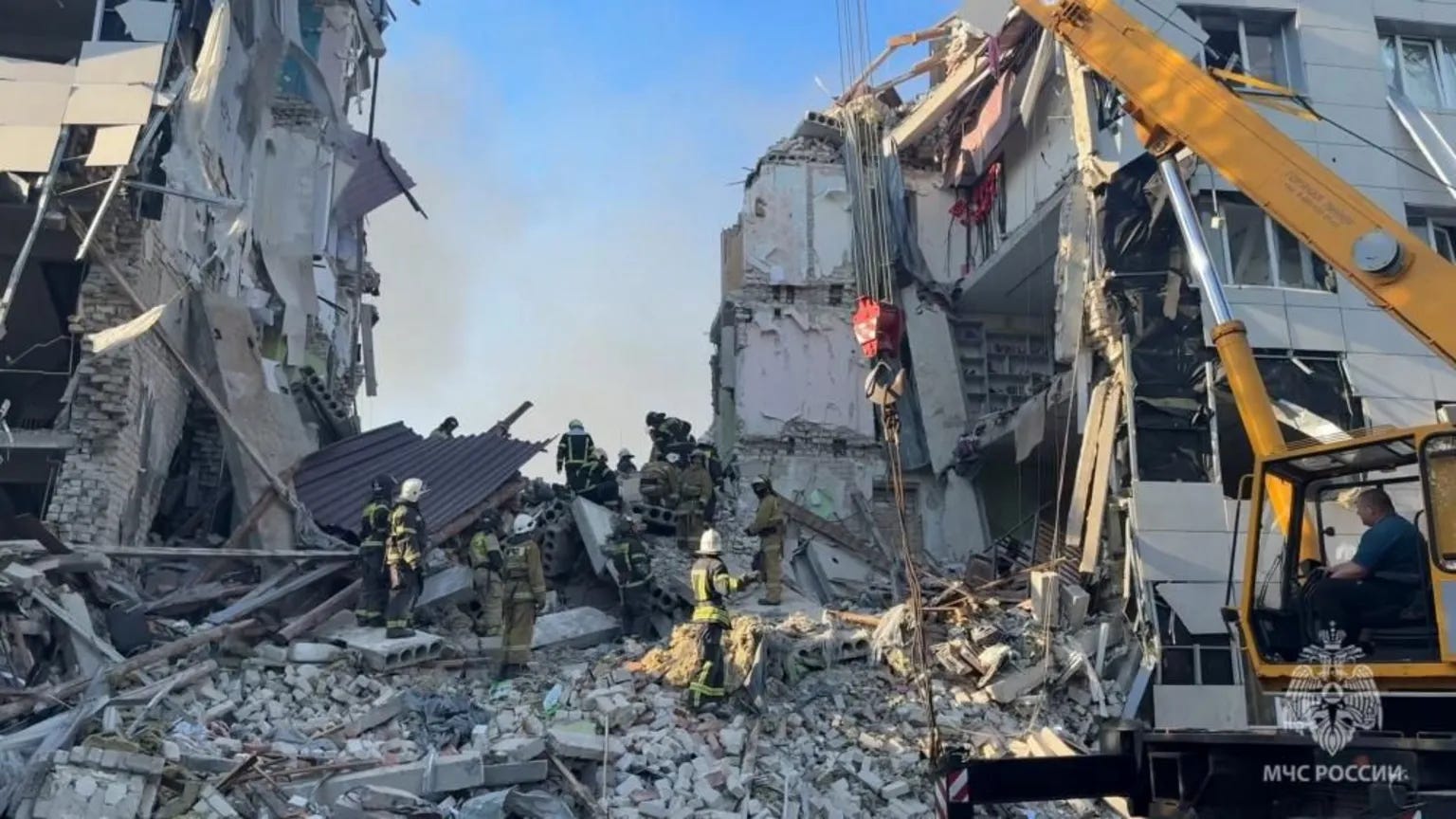
Putin accused Ukraine of carrying out a deadly drone attack on a student dormitory in Russian-occupied Starobilsk, in Luhansk, where Russian officials said 18 people were killed and more than 40 injured. Ukraine said it had targeted the headquarters of Russia’s elite Rubicon drone unit and denied intentionally striking civilians. Putin ordered the military to prepare retaliation, while Zelenskyy warned that Russia may be preparing a major combined strike using hypersonic Oreshnik missiles. The pattern remains brutally familiar: a negotiated aperture opens, human beings pass through it, and then the war closes over them again.
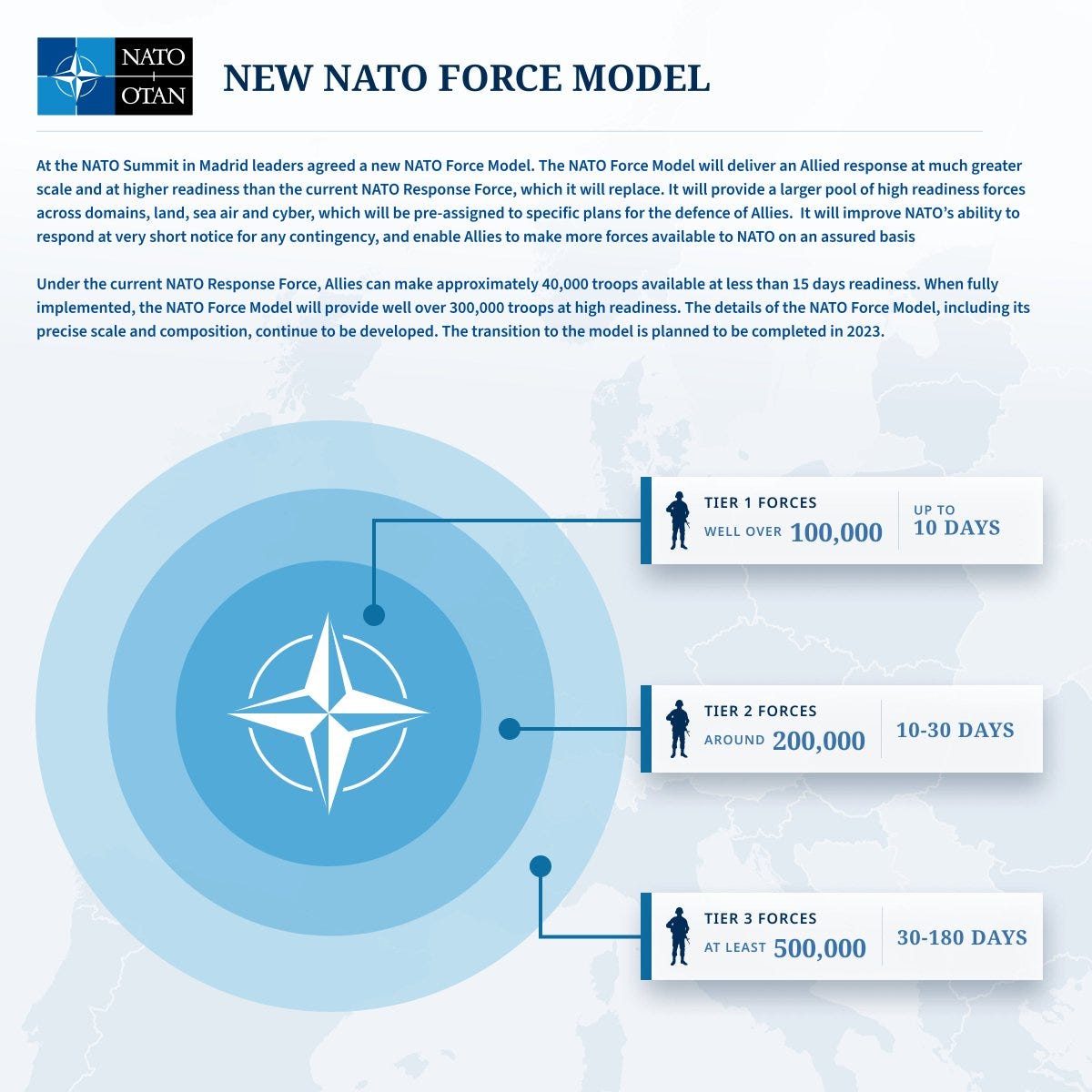
📍NATO’s stress test deepened this week as Washington signaled it may reduce the pool of U.S. forces and capabilities available to the alliance in a crisis. Under the NATO Force Model, member states identify forces that could be mobilized in an emergency, including an attack on a NATO country. Shrinking the U.S. contribution would not mean America has left NATO, but it would force Europe to plan for a future in which U.S. support arrives with fewer guarantees, more conditions, and less automatic depth. The timing is especially uncomfortable. Russia remains locked into the Ukraine war, the U.S. is consumed by Iran, and recent troop-deployment confusion around Poland has already rattled allies. Washington is still central to NATO, especially through its nuclear umbrella, but the message to Europe is increasingly blunt. America may still show up, but not necessarily in the same numbers, on the same schedule, or without a political price. For NATO, the question is no longer only whether members spend enough. It is whether the alliance can function when American commitments start arriving with conditions, delays, reversals, or moods attached.
