Sassy Trump, UAE sheds OPEC, AI wars, juntas, mercenaries, no confidence votes, elections, Bulgaria: EU's headache. It's May Day! We've got art. Swing around the May Pole with us.
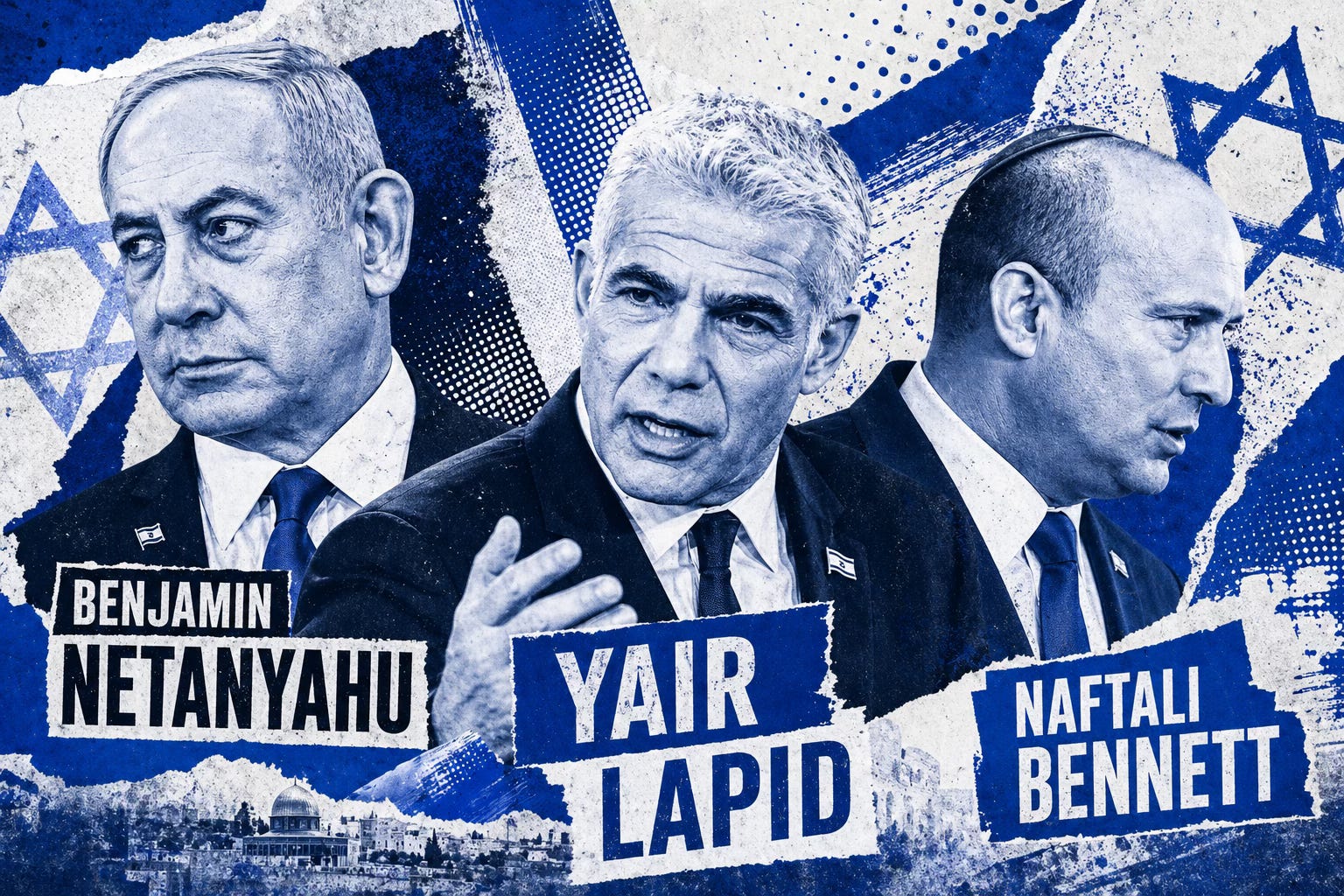
Trump’s had some sassy remarks this week from questions regarding the War Powers Resolution to the German Chancellor. And now he wants inside your U.S. passport. Abu Dhabi is done with OPEC. Gulf unity is fraying — yet another lightning bolt of geopolitical re-alignments in the Year of the Horse. Goldman Sachs predicts the United Arab Emirates’ exit from OPEC will “increase the risk of higher oil supply in the medium term”. Foreign Minister Abbas Araghchi told mediators that there is currently “no consensus” inside Iran’s leadership and recent reports estimate that Iran has only about 22 days of onshore storage capacity remaining. Israeli centrist unity coalition led by Yair Lapid and Naftali Bennett cite inspiration of Viktor Orbán’s ouster to unseat Benjamin Netanyahu’s far-right ultra-Orthodox-backed government. Tiny democracy, giant migraine. Mali’s junta losing its security mythology as Jihadist insurgents and Tuareg secessionists assassinated Mali’s Defense Minister Sadio Camara at his home. The AI wars continue to stay hot and yet more confirmation on a long held belief for Chinese tech entrepreneurs: leaving China does not necessarily mean escaping Chinese state control. Hezbollah says it’s inspired by the suicide bombers of the 80s and 90s. There was a car bomb in Northern Ireland — the Troubles never really left us, after all. Ukraine hits Black Sea’s Tuapse. Bulgaria is about to become the EU’s pro-Kremlin nightmare. There’s so much news, thoughts, graphs and art to share!
Thank you for reading this far. Paid subscribers get full access to Grounded Perspectives and our Friday wrap ups, plus much more. If you’re so inclined, throw a couple coins into our human battery fund — also known as mochas and green teas. We’re glad you’re here.
The map is dark in places. The satellite may flicker. The signal has not gone out. — Ali & Asli
Don’t doomscroll. Let us do it for you!
Upgrade to paid for just $5 and you’ll get full access to all our Friday wrap ups! It’s worth it. We always bring the juice!
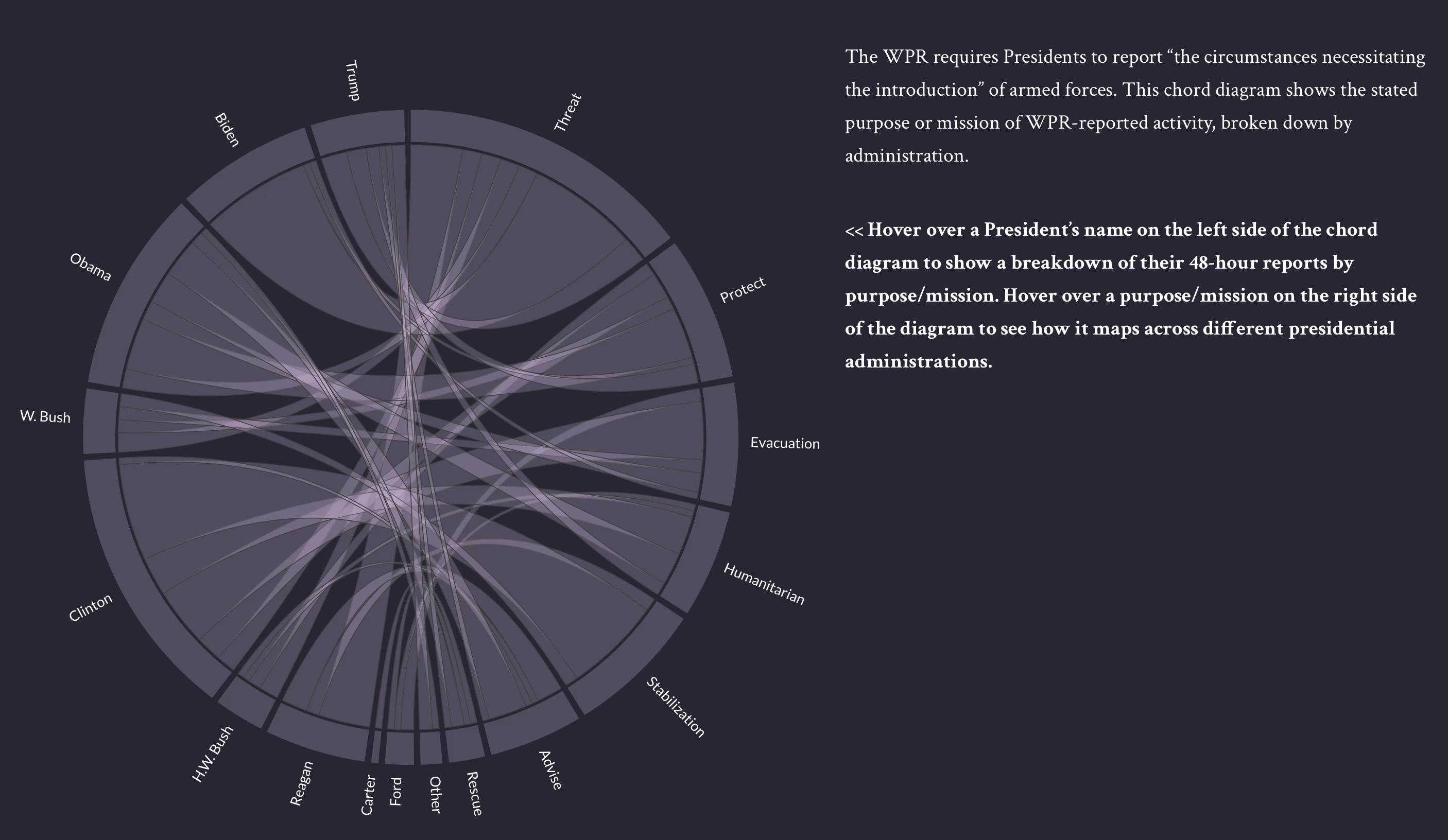
Purpose/Mission of WPR Reported Activity by Administration via Reiss Center on Law and Security at NYU School of Law
🎯 War Powers Clock Hits Washington | The War Powers Resolution of 1973 hits a major deadline today, as the U.S. campaign against Iran reaches the 60-day mark without formal congressional authorization. The 1973 law does not require Congress to pass a resolution to force the issue, but it does sharpen the constitutional fight over who gets to keep America in a war. Democrats are already pressing the case, and some Republicans may join them — less because the votes are guaranteed, and more because Congress is being pushed to say, on the record, whether this war belongs to the president alone.
via Reiss Center on Law and Security at NYU School of Law
Trump, for his part, is not sounding especially constrained by the calendar. Asked about the deadline, he brushed off pressure to move quickly: “Don’t rush me,” pointing to Vietnam, Iraq, World War II, and Korea before adding, “I’ve been doing this for six weeks.” The message was classic Trump: history as shrug, war powers as inconvenience, and the clock treated less like a legal limit than another thing to bulldoze through.
“Don't rush me. We were in Vietnam, like, for 18 years.”
— President Donald J. Trump on the War Powers Resolution and ceasefire negotiations with Iran
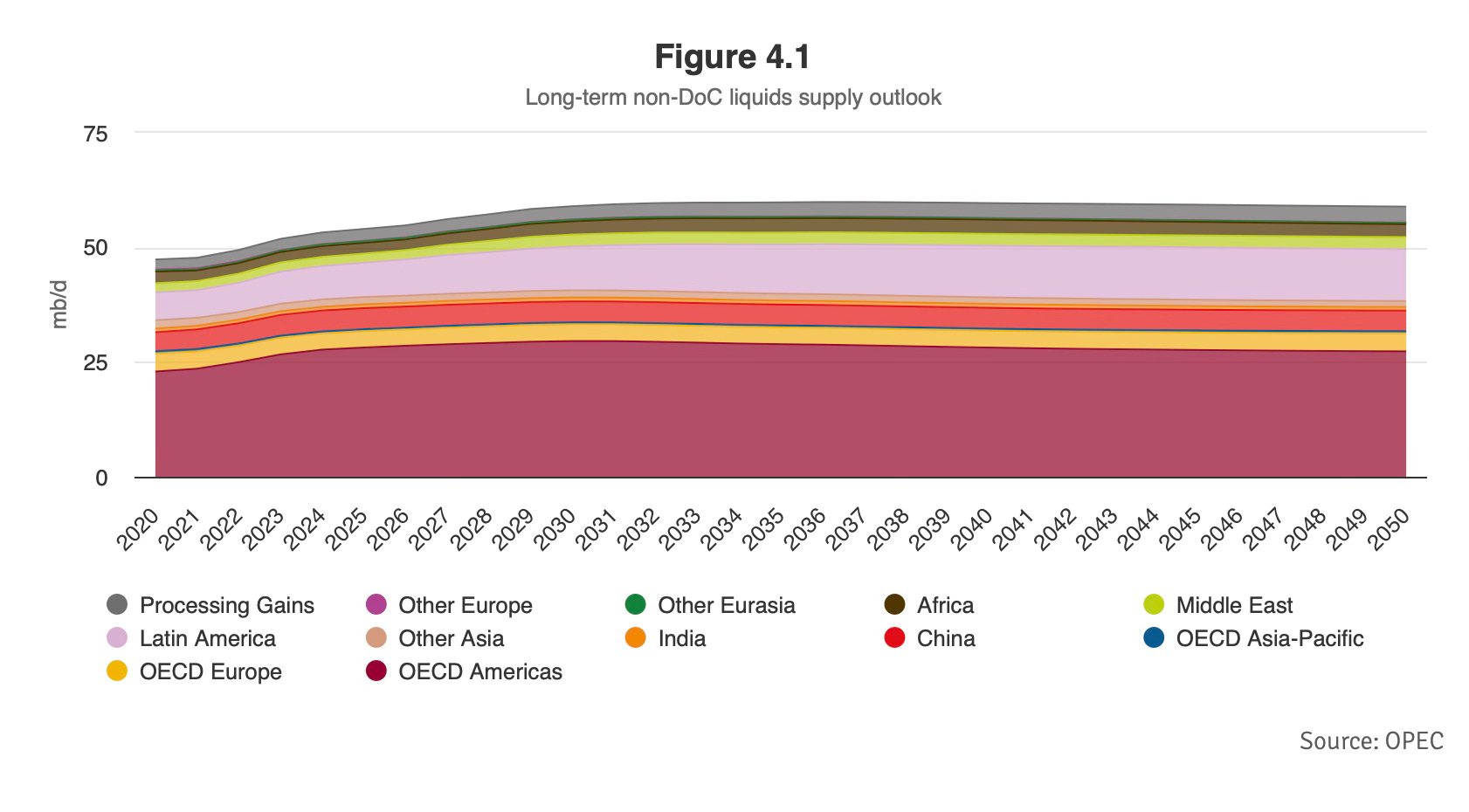
🎯 UAE Breaks With OPEC | The United Arab Emirates announced it will leave OPEC and the wider OPEC+ framework on May 1, ending nearly six decades inside the oil cartel and stripping the group of one of its largest Gulf producers. The move has been brewing for years: Abu Dhabi has long bristled at production quotas that limited its ability to pump at capacity, especially as it poured money into expanding output. But the timing gives the decision extra force. With the Strait of Hormuz still choking Gulf exports, the UAE’s exit lands less like a market shock today and more like a warning flare for what comes next — a post-crisis oil order where Abu Dhabi wants more freedom, more barrels, and fewer instructions from Riyadh.
It is also another sign that Gulf unity is not what it used to be. Saudi Arabia remains OPEC’s center of gravity, but the UAE is no longer content to sit neatly inside Riyadh’s orbit. Qatar, Indonesia, Ecuador, and Angola have all left OPEC before; now the Emiratis are joining that list at a moment when energy markets are already under strain. In the short term, Hormuz limits how much this changes physically. In the medium term, it could weaken OPEC’s grip on supply discipline and sharpen the quiet Saudi-Emirati rivalry shaping the Gulf from oil policy to regional power.
Goldman Sachs predicts the United Arab Emirates’ exit from OPEC will “increase the risk of higher oil supply in the medium term”, although the near-term impact is likely to be limited. It’s likely Abu Dhabi will get greater room to raise output once export routes in the Gulf region normalize. Oil prices surged more than 6% yesterday.
🎯 Iran Chokes On Its Own Oil | It is unclear whether IRGC commander and aspiring dictator Ahmad Vahidi even supports the diplomatic off-ramp. Foreign Minister Abbas Araghchi told Pakistani, Egyptian, Turkish, and Qatari mediators that there is currently “no consensus” inside Iran’s leadership on how to navigate U.S. demands.
That internal split is colliding with a much more physical crisis: oil with nowhere to go. Iran’s inability to export crude is strangling the regime financially, while keeping that oil onshore is becoming its own existential threat. The U.S. blockade has pushed Tehran toward desperation, forcing officials to stockpile crude in makeshift “containers” and disused oil tanks in poor condition. Reports have circulated that estimate that Iran has only about 22 days of onshore storage capacity remaining.
Once that threshold is crossed, Tehran may be forced into one of its most drastic options: shutting down domestic oil production. For an aging oil sector, that is not a simple pause button. Restarting wells can be expensive, technically difficult, and politically dangerous.
AI generated image by Asli Omur
🎯 Netanyahu Pressed From the Sea to the Ballot Box | Israel is facing a new wave of international condemnation after its forces intercepted the Global Sumud Flotilla near Crete, seizing more than 20 Gaza-bound aid boats hundreds of miles from the strip.
The flotilla, which had set out with activists and humanitarian supplies for Palestinians in Gaza, was attempting to challenge Israel’s maritime blockade. Organizers accused Israeli forces of boarding the vessels in international waters, damaging engines, jamming communications, and leaving some boats stranded as weather conditions worsened. Israel said the operation was necessary because of the flotilla’s size and alleged links to Hamas, and said the aid could be redirected through Ashdod instead. About 175 activists were detained and are expected to be transferred to Greece, while Italy condemned the seizure as “unlawful” and Turkey called it “an act of piracy”.
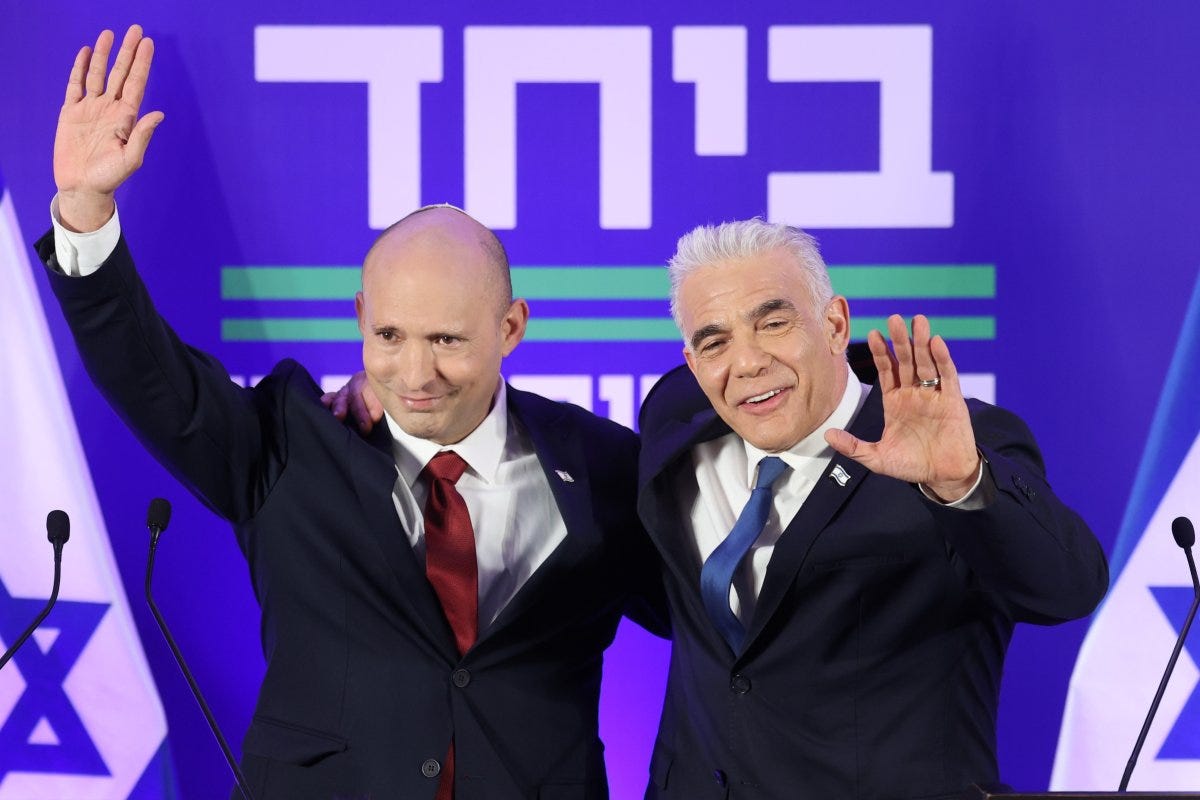
Naftali Bennett and Yair Lapid on the Beyachad "(“Together”) centrist unity campaign trail
The flotilla crisis lands at a dangerous political moment for Benjamin Netanyahu. Aiming to finally end the career of Israel’s longest-serving prime minister, Naftali Bennett and Yair Lapid — both former prime ministers — have merged their factions into a new joint party, Beyachad (“Together”), ahead of Knesset elections due by October 27. Bennett will lead the alliance as its prime ministerial candidate, with Lapid’s backing, in what is effectively a third attempt to build an anti-Netanyahu vehicle: first in 2013, when the two pushed to end Haredi draft exemptions and forced Netanyahu to exclude the ultra-Orthodox from his coalition; then in 2021, when their broad anti-Bibi government, including the Islamist Ra’am party, pushed Netanyahu into opposition before collapsing 18 months later.
This time, Bennett framed the move as a “unity project”, even pointing to Viktor Orbán’s recent defeat in Hungary as proof that entrenched leaders can be removed. The comparison is not accidental: Orbán’s Fidesz party was routed on April 12 by Péter Magyar’s Tisza party, ending 16 years of Orbán rule and giving opposition forces across the right and center a fresh example of an “unbeatable” leader suddenly beaten.
Netanyahu may not be finished but polling suggests the Bennett-Lapid bloc may jolt the race. It does not yet necessarily have a clear path to a Knesset majority, especially with Israel still fighting on multiple fronts against Iran and Hezbollah and with the country’s politics hardened by war, security fears, and the unresolved Haredi draft fight. But the symbolism matters: as Israeli forces seize Gaza aid boats at sea and allies condemn the operation abroad, Netanyahu’s old rivals are trying to turn external isolation and domestic exhaustion into an electoral battering ram.
And yet, there is a strong likelihood of the Bennett-Lapid centrist “reform” and “unity” coalition edging out Likud as largest party in the Knesset, after all.
Tiny democracy, giant migraine.
Continue reading this post for free, courtesy of Grounded Perspectives.